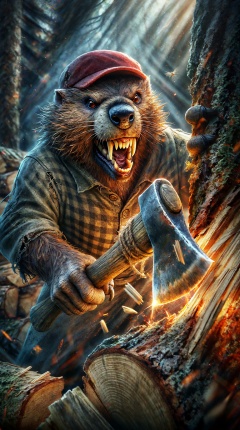
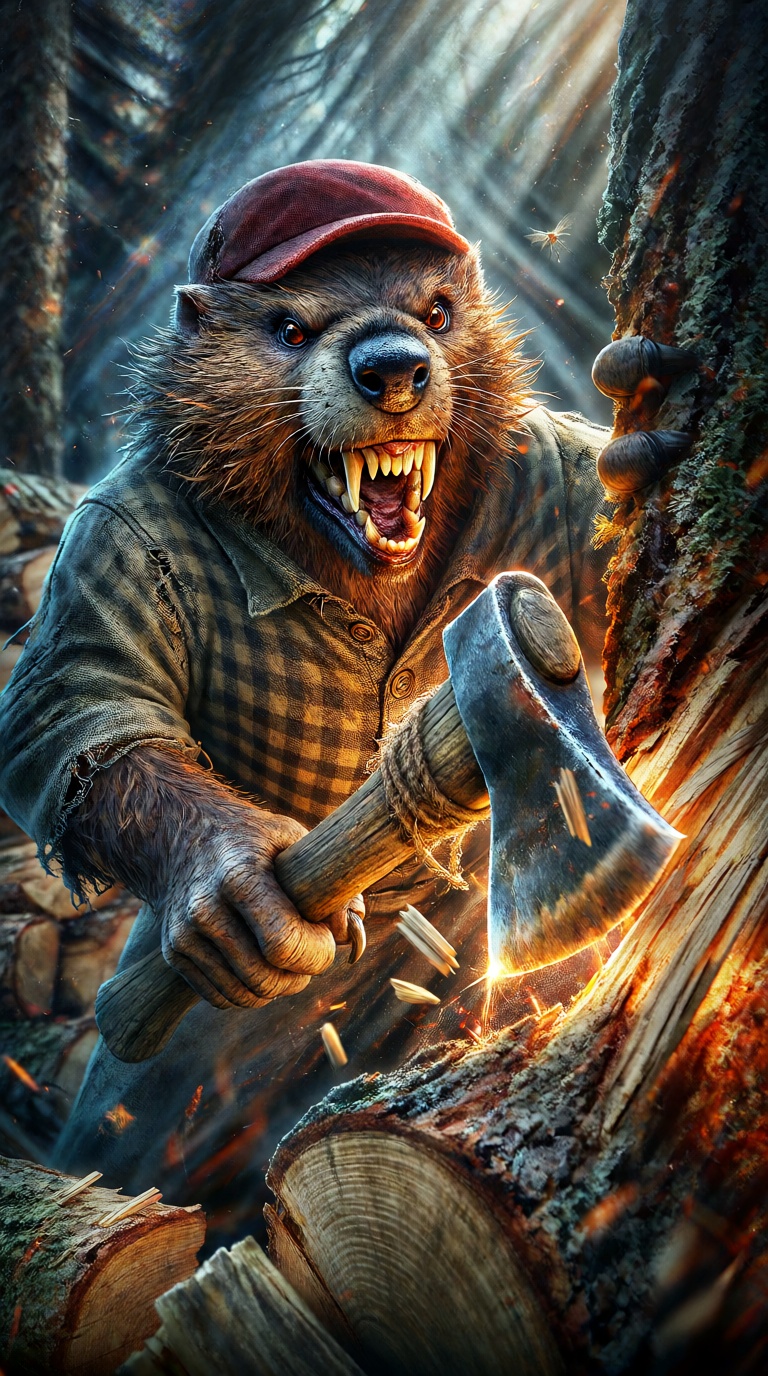
Create a photorealistic illustration at 8K with absurdres and ultra‑detailed quality. Use HDR, high contrast, cinematic lighting, volumetric light, and dramatic shadows. Apply a Dutch angle combined with a low, from‑below camera perspective—this makes the figure tower over the viewer, amplifying the sense of threat and brutality. Depth of field keeps the beaver anthro razor‑sharp while the forest background gently blurs, ensuring maximum focus on the terrifying subject. Every texture—fur, fabric, wood, metal, enamel—is rendered with extreme material fidelity and microscopic detail.The subject is a male beaver anthro, but rendered in a horror aesthetic: not whimsical or cute, but grotesque and menacing. His body is humanoid and heavily muscled, covered in coarse, dark brown fur. Each individual hair is visible, with subtle variations in length and direction; some strands are matted with sap, dirt, and dried resin, giving the coat a rough, lived‑in texture. The fur transitions to shorter, denser hair around the face and neck, revealing the heavy, angular bone structure beneath: a broad, flat skull, pronounced brow ridge, and a powerful, elongated jawline that speaks of raw strength.His head is distinctly beaver‑like but exaggerated to the point of horror. The muzzle is wide and heavy, dominated by massive incisors—huge, orange‑brown beaver teeth, chipped and worn from gnawing, with micro‑scratches and natural imperfections visible on the enamel. These teeth protrude in a permanent, unsettling grimace, their curvature and size making the expression inherently cruel. A faint, eerie glow emanates from the teeth themselves, as if charged with an unnatural energy—the luminescence is subtle but unmistakable, casting tiny amber highlights on the surrounding fur and lips.His eyes are solid, glossy black—no visible iris or pupil, just a deep, void‑like surface that reflects the forest light like polished obsidian. Around the edges of the sclera, a faint sickly glow pulses, reinforcing the inhuman, predatory nature of his gaze. The lighting accentuates the hollows beneath his brow and the sharp planes of his cheekbones, deepening the shadows and making his expression even more brutal.He wears a checkered shirt—the fabric rendered with photorealistic texture: the weave is visible, threads slightly frayed at the cuffs and collar, some buttons strained by his muscular frame. Over this, the outfit is completed with simple trousers and a red cap, slightly tilted, its fabric worn and faded, with tiny creases and subtle discoloration from sun and weather. The clothing grounds the figure in a mundane, almost lumberjack‑like reality, which only makes his monstrous features more disturbing by contrast.In one hand, he grips a woodcutter’s axe. The blade is polished and sparkly, catching the light with sharp, brilliant reflections; the edge is razor‑sharp, with microscopic nicks and scratches that speak of heavy use. The metal has a subtle gradient from silver to a faint blue‑grey along the cutting edge. The handle is weathered wood, grain clearly visible, wrapped with coarse twine that shows fraying and wear. The grip is tight, fingers curled with brutal strength, tendons standing out on the back of the hand—every knuckle, nail, and crease rendered with perfect anatomical accuracy.Part of the composition shows him biting into the trunk of a tree—a dynamic, violent action frozen mid‑moment. The wood splinters around his teeth; tiny shards and curls of bark fly outward, suspended in the air, each fragment sharply defined. The tree bark is rendered with realistic texture: rough ridges, deep grooves, and patches of moss or lichen. The pressure of his bite is evident in the compressed wood fibers and the way the trunk begins to crack under the force.Behind him, the forest stretches into the blurred distance, creating a moody, atmospheric backdrop. Tall trees rise up, their trunks textured with bark patterns, knots, and lichen. Shafts of volumetric light slice through the canopy, illuminating floating dust particles, motes of pollen, and tiny insects. The light is directional and dramatic: a cold, silvery glow from above mixes with warmer, amber tones filtering through the leaves, casting long, jagged shadows across the ground and the figure’s body. Deep shadows pool beneath the trees and around the character’s feet, enhancing the sense of danger and isolation.In the background, stacks of chopped firewood are visible—logs piled haphazardly, their cut ends showing concentric growth rings, bark fragments, and splintered edges. The wood has a realistic, tactile quality: rough surfaces, tiny cracks, and subtle color variations from pale sapwood to darker heartwood.Style: pure photorealism with a horror‑fantasy edge—every surface rendered with extreme detail and material accuracy, while the composition, lighting, and perspective amplify the brutality and unease. Mood: a moment of primal, unsettling violence—a creature that should be harmless rendered terrifying, his posture and expression promising danger, the forest around him holding its breath as he stands poised between labor and savagery, the sparkly axe and glowing teeth marking him as something far beyond ordinary.masterpiece, very aesthetic, Pow4rK2w0lf,