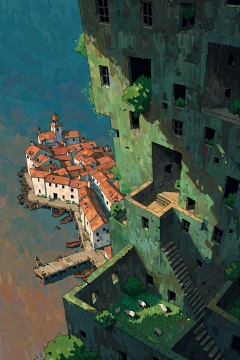
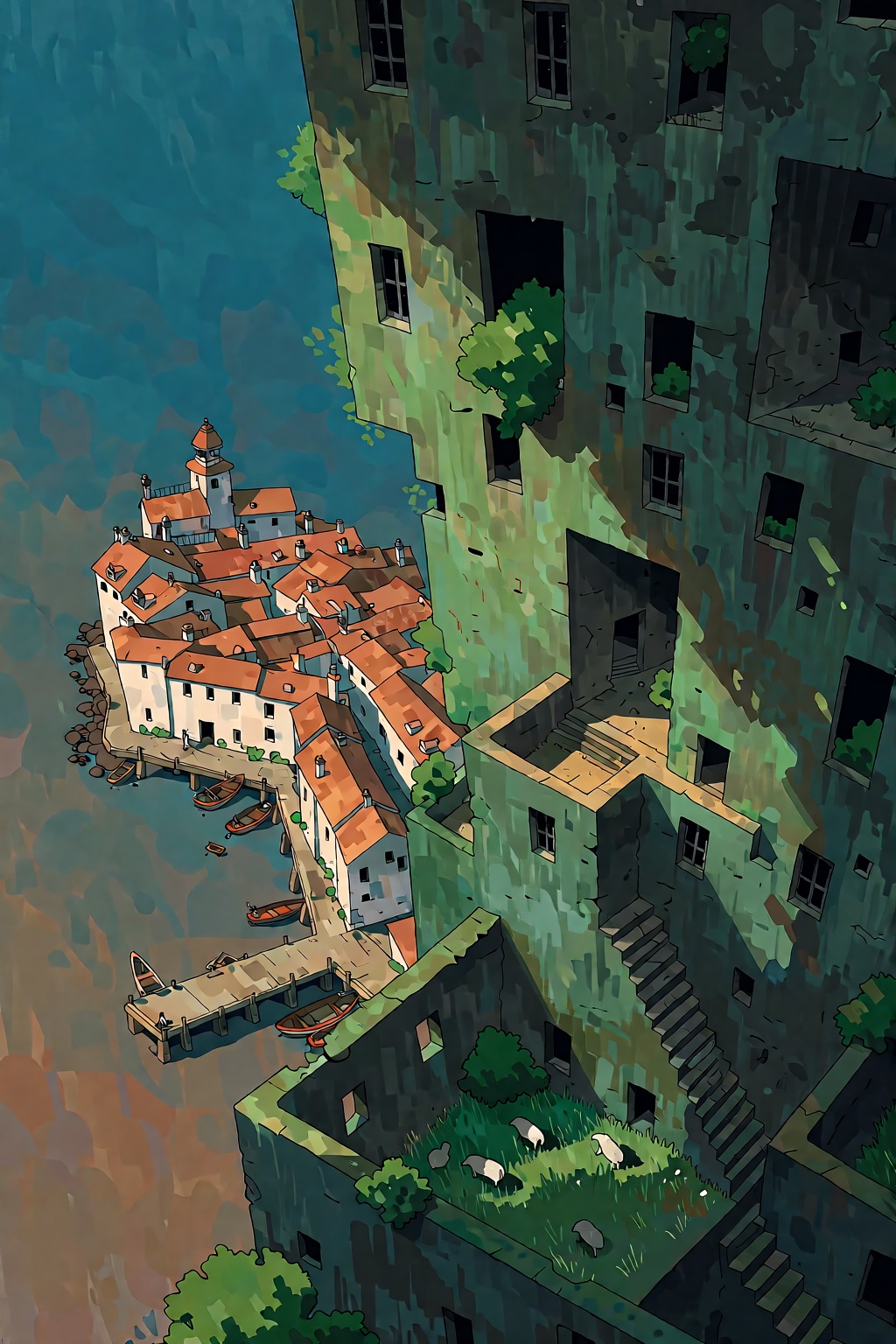
The image depicts a striking juxtaposition between an expansive, overgrown cliffside community in the foreground and a quaint, sunny coastal town in the background. The foreground is dominated by large, weathered, green-tinted structures that appear to be repurposed or reclaimed by nature, with many walls crumbling or open to the air, and lush green vegetation spilling out from windows and rooftops. These buildings are painted in varying shades of mossy green and dull olive, featuring straight, gabled rooflines and stark, open doorways that cast deep shadows against the interior spaces. A small group of white sheep grazes on a patch of grass near a staircase carved into the lower terrace of this elevated section, providing a sense of scale to the massive, vertical architecture. The color palette of the foreground relies heavily on earthy greens, muted browns, and the deep charcoal tones of shadows within the ruins. In contrast, the background features a vibrant, peninsula-shaped town jutting out into a deep, calm body of water that shifts from a dark, muddy blue near the shore to a lighter, more vibrant turquoise. This town consists of a cluster of tightly packed buildings with terracotta-tiled roofs, white walls, and warm, orange-toned highlights consistent with late afternoon sunlight. A small pier extends into the water from the lower part of the town, with several small boats moored along its length. The lighting creates a distinct division, as the sunlit town provides a warm and inviting atmosphere, while the foreground remains draped in the cooler, deeper tones of shade, with the stone surfaces reflecting subtle textures of decay and age. The entire scene is rendered in an artistic, painterly style that emphasizes bold shapes and a clear separation between the shaded, towering cliff buildings and the sun-drenched, maritime village below. There is no written text present in the image, and no human characters are visible in the composition.