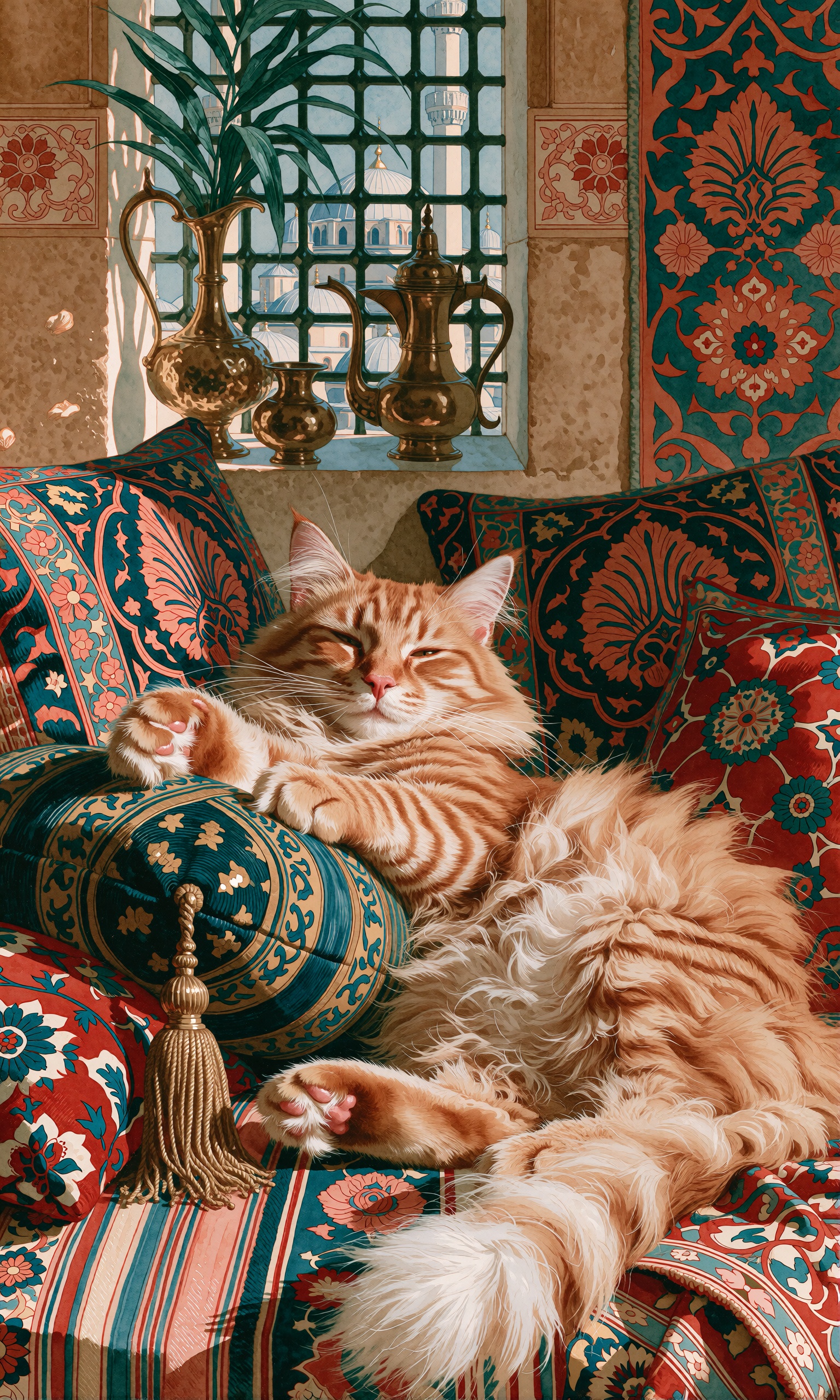
A fluffy long-haired ginger tabby cat lounges in drowsy contentment across heaped cushions, its green eyes half-closed, pink nose and long white whiskers relaxed, one forepaw stretched forward and its tail curled with a white tip, a hind paw showing soft pink pads. The cat rests its head on a teal-and-gold Ottoman-patterned cushion with a hanging gold tassel, surrounded by layered textiles in Iznik-style designs — coral palmettes and arabesques on deep teal, floral rosettes on red grounds, and striped border bands. Behind, an arched window with green leaded lattice opens onto a pale vision of a mosque with clustered domes and slender minarets. On the windowsill stand brass vessels: a tall ornate ewer holding long green leaves, a small round pot, and a long-spouted brass coffeepot. Warm ochre plaster walls carry painted floral border bands, and a hanging wall textile with large teal-and-coral arabesque motifs fills the right side. Soft warm daylight diffuses through the window in gentle watercolor washes. The composition is vertical, the cat filling the center and lower two thirds. The style is a watercolor painting in the nineteenth-century Orientalist interior tradition — translucent washes, fine line detail on fur and pattern, a palette of teal, coral red, ochre gold, cream, and ginger orange, carrying a mood of serene domestic warmth and languid comfort.